
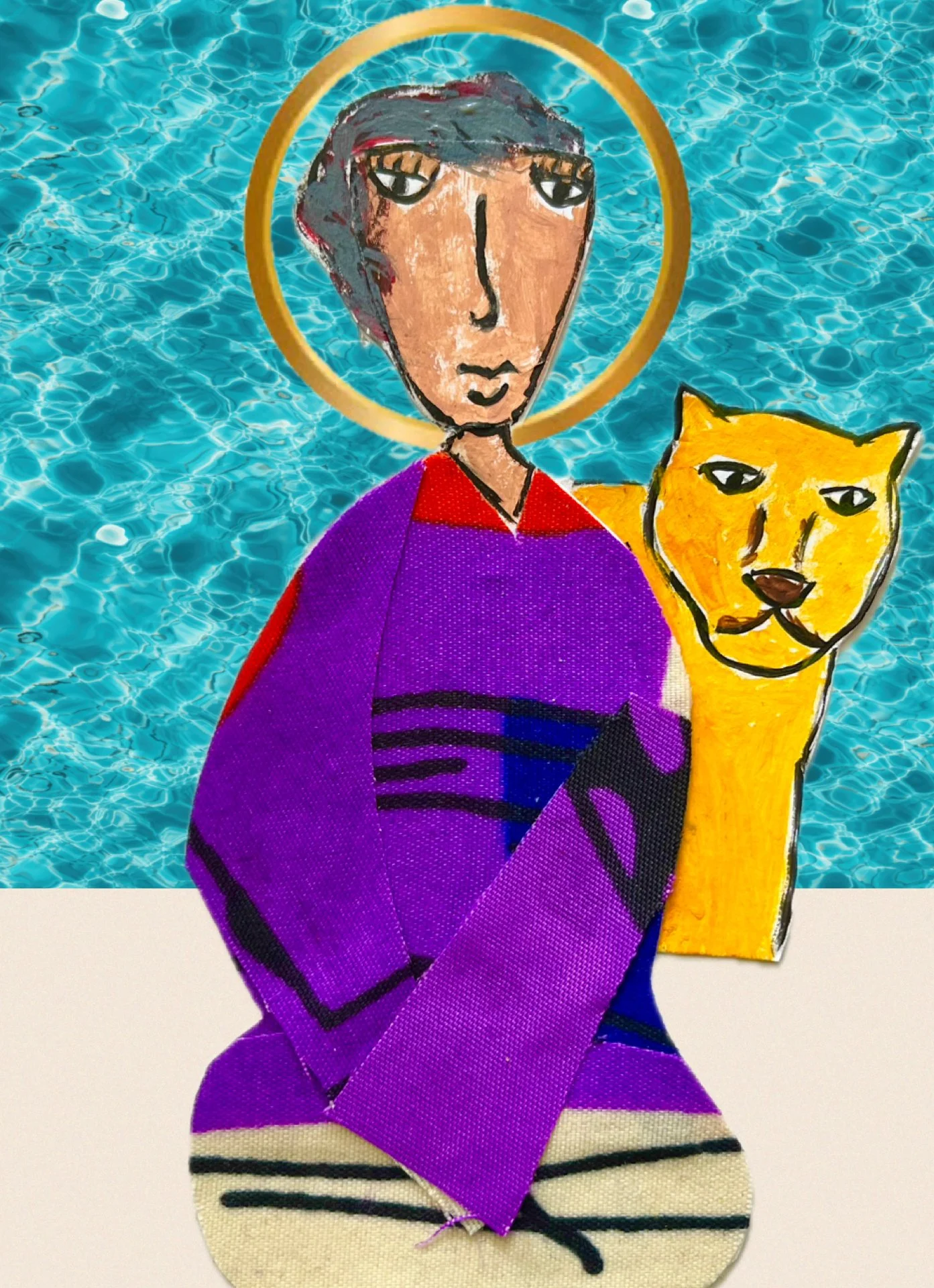
St Thecla
Thecla was the first saint I encountered during my early graduate studies, prompting an initial interest in contemplative movements in the Ancient Near East and, more specifically, the use of asceticism at the time to subvert Roman imperialism. Thecla is described as a follower of Paul, whose faith in the Gospel message helped her overcome attacks by the governing authorities. After many years of warring and traveling, she made her home in or near a cave by the seaport, becoming an herbalist and spiritual healer.
The latter of which informs Byzantine Hoodoo’s focus on Thecla, asking questions such as: what does ancient knowledge about the carob tree in Syria have to offer in this pursuit? How might the sedimentary stones of the Tarsus mountains or knowledge of the lunar cycle in that region have provided sustenance for Thecla’s ecological niche? What impact could trade near a seaport dwelling place have had on plant cultivation and water systems? How might this information provide readers with a contemplative eco ethic to use today?
These are questions that I hope to continue exploring through rewrites and edits to my MAR thesis. Most importantly, however, Byzantine Hoodoo posits these questions with contemporary concerns and debates on climate change and environmental justice movements where clean water advocates speak to industrialization and its impacts on those who depend on water systems for work and livelihood (primarily thinking about rural and coastal communities). These concerns are especially raised when protection policies are not in place to limit or prevent development due to the risks of industrial contaminants. I have also listened to news reports about the Colorado River drying up and conversed with folks on how Antarctica is melting. All of which deserve space in public policy settings.
The one in particular that I have been in most contact with is AI data centers and concerns about the amount of water they will use. Some researchers have indicated that the amount of water and its costs used to build and maintain these centers are roughly two times the combined amount of water and costs used across all industries currently using water. These are some of the industrial plants that folks are concerned about, and it reveals what some might consider two opposing forces at work…
relational bonds with the earth for natural wellness vs. reliance on the earth for digital advancements because of global competition.
In this framework, we are at an impasse that may or may not be solvable. For more insight into Byzantine Hoodoo’s response to this, check out the description for the icon St Photini.