
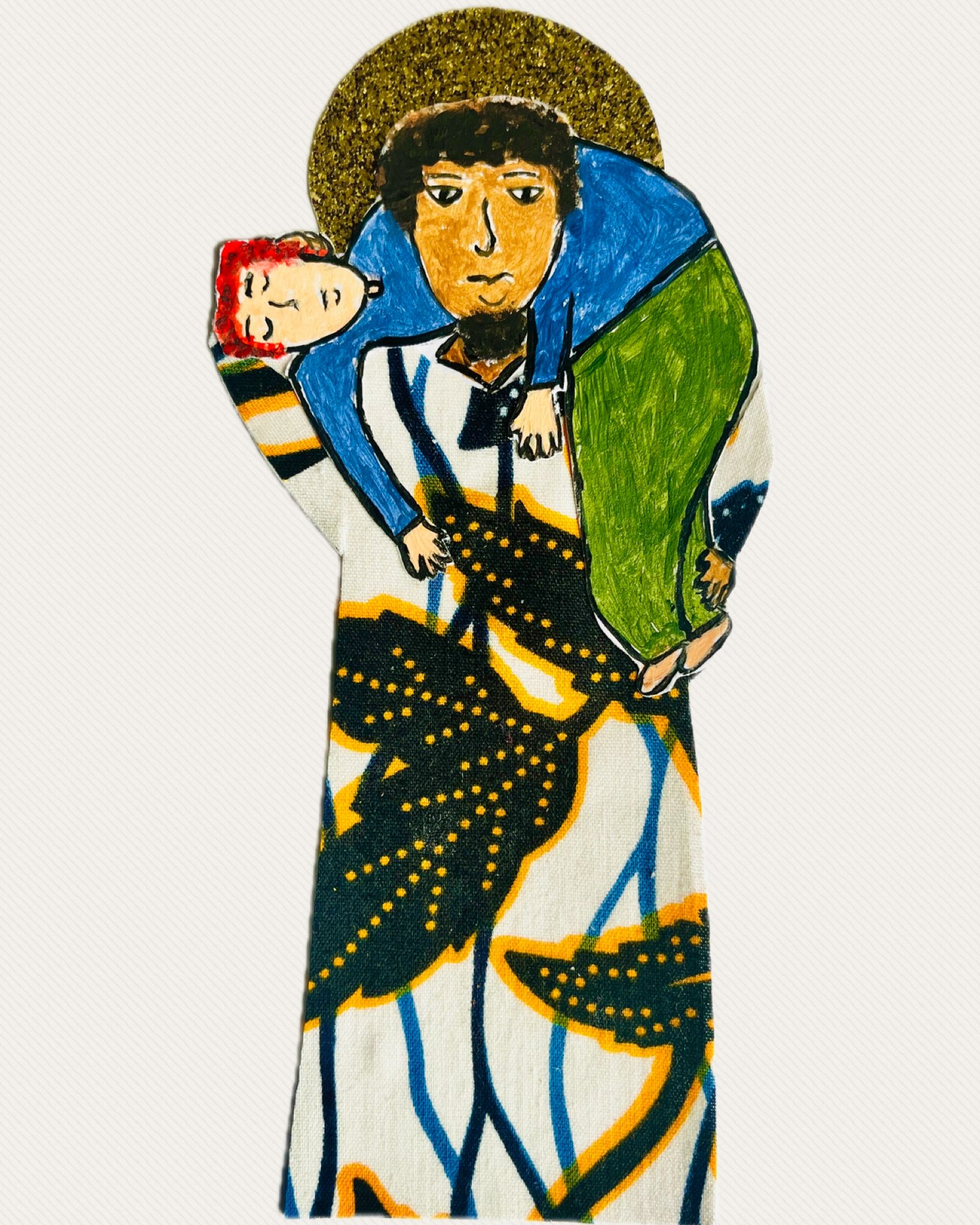
The Good Shepherd
i/you/we are in Good hands
In traditional iconography, The Good Shepherd is written as Jesus the Christ holding a lamb or sheep with a staff in hand. Its earliest depictions were found on the walls of 2nd-century Roman catacombs (Jewish and/or early Christian burial sites). The icon is regarded as a symbol of protection, sacrifice, and leadership–most often associated with biblical passages about Jesus leading the “flock” of people, and then becoming the “sacrificial lamb” for the people.
Many places in this region of this era were made up of pastoral and rural communities. And as is customary for cultural preservers, image writing thus resembled the lived experiences of the people. Shepherding was common; therefore, the story and the movement leaders who shaped this newfound faith tradition were imitated by how the people viewed pastoral community living.
Byzantine Hoodoo acknowledges the cultural moment; however, its focus is on the leadership and careful attention that is transferred between “Shepherd” and “Sheep.” Jesus offered insight and healing, yet made sure to find moments of retreat for restoration and repair. Therefore, at any moment, a Mary or a Peter could take on the role of leading the people, offering careful attention, using discernment, and sacrificing time and energy to ensure the people were shepherded and loved. So Byzantine Hoodoo encourages us to know when to step up, to lead, and to offer care, while also having and then trusting an inner circle and broader community to carry the weight at times–or to even balance the load amongst the many when at all possible.