
St George, Make Amends
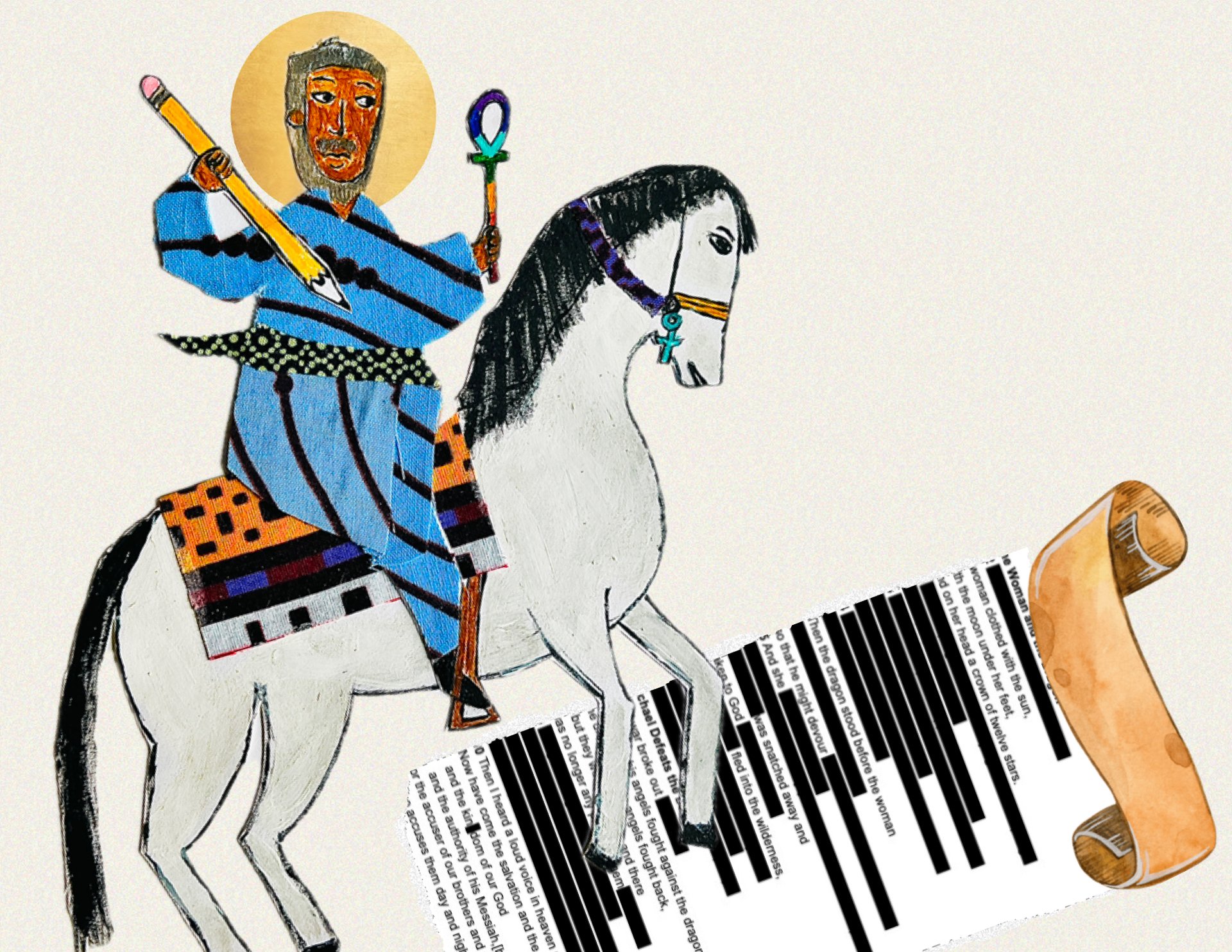
St George, Make Amends borrows from the image of St George, the military saint shown slaying a dragon in traditional iconography. The 11th-century legend of St George asserts that he arrived in a city in Libya to fight off a dragon who was trying to take over. The people sought to appease the dragon by giving it sheep; however, once the sheep were nearly gone, the king of the city’s daughter became the target. St George is said to have thrown himself into the fight instead, slaying the dragon with his sword while riding a white horse.
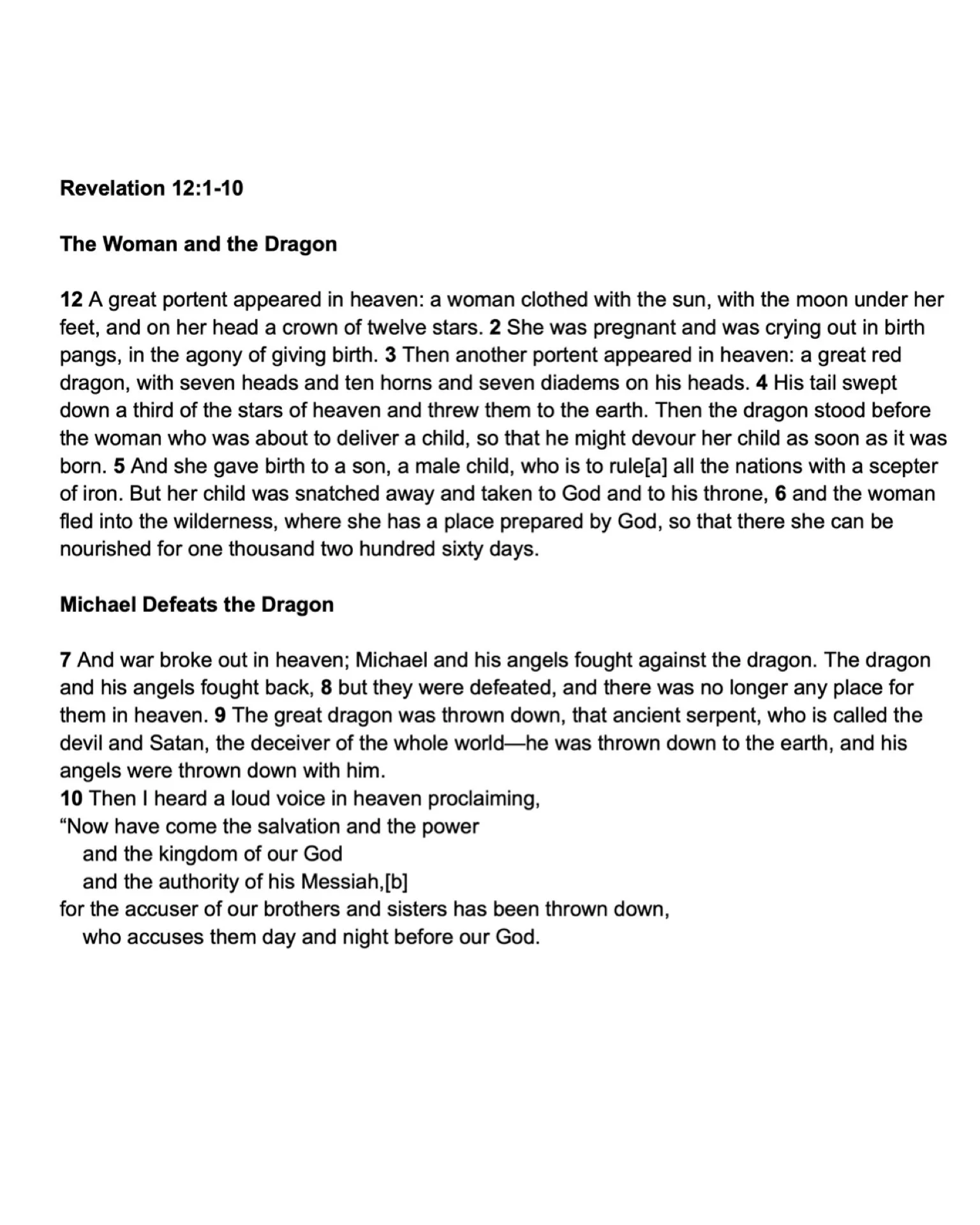
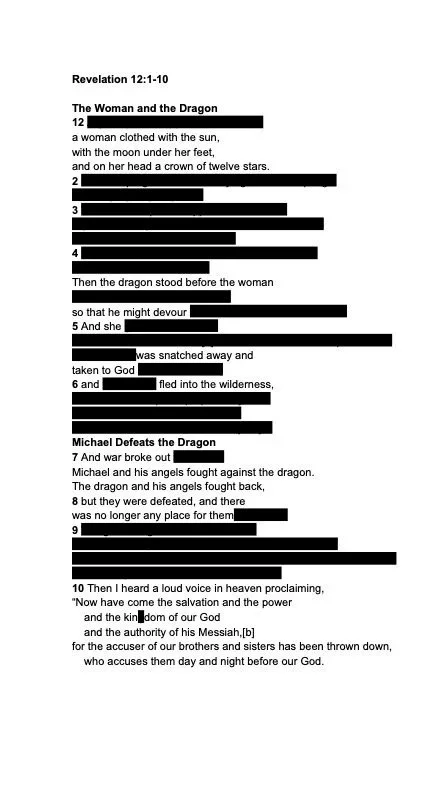
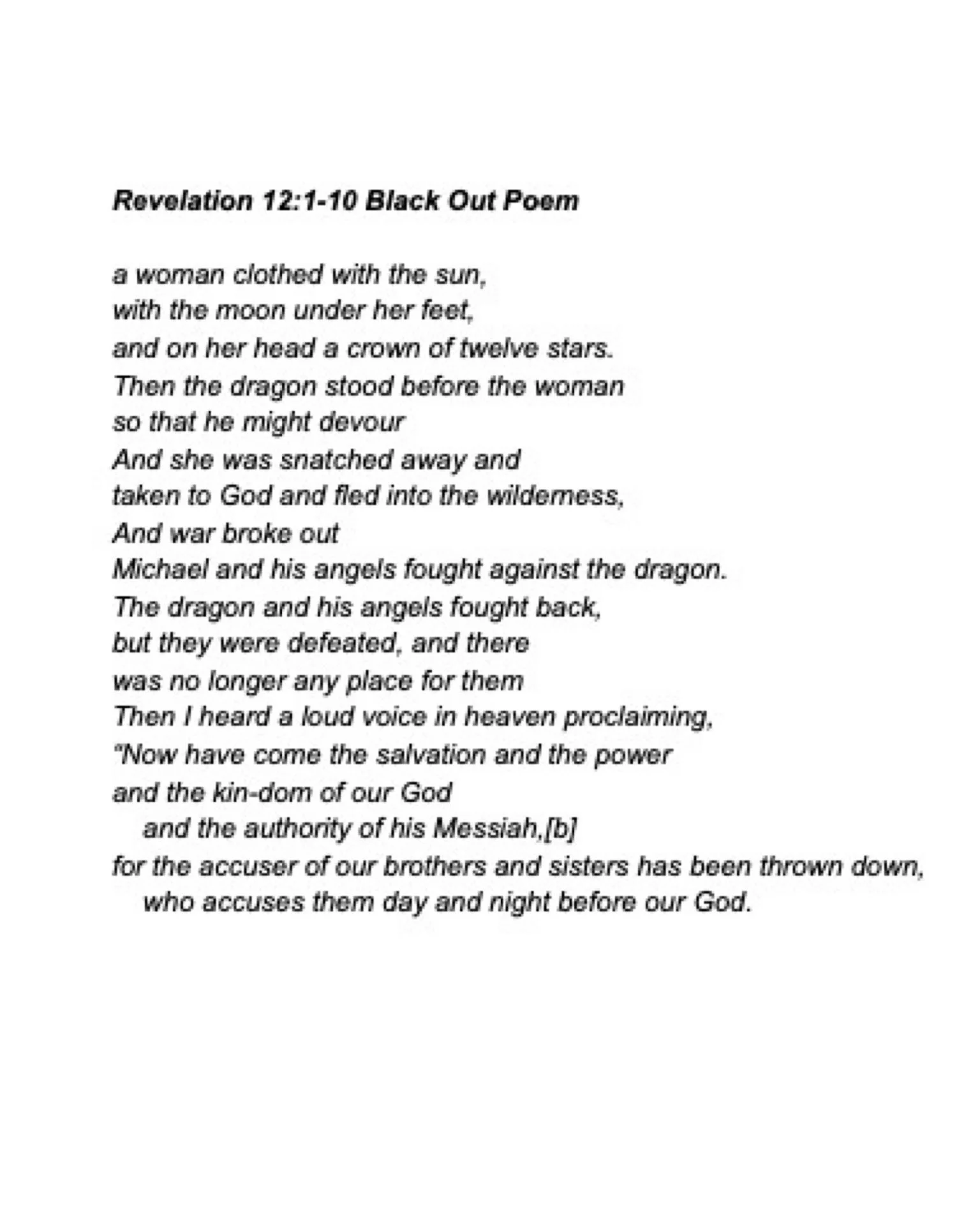
Byzantine Hoodoo has drafted an image with St George holding a small staff in one hand and a large pencil in the other. The story reminded me of passages from the Book of Revelation, so St George and the horse are standing over a torn scroll with Revelation 12:1-10 in Black Out Poetry on the scroll. The Book of Revelation has been argued to speak to the “end times” for centuries, with apocalyptic literature studied as a move towards new systems, ending old harmful patterns to live into a collective power of goodness and justice.
St George, Make Amends thus queries the saint to write new texts and new laws; to re-member and reimagine ancient wisdom and sacred texts; to make amends to outdated constructs; and to give fresh insight for the governance of the day. It acknowledges the need to conquer physical, emotional, systemic, and spiritual dragons—to rise out of whatever one’s wilderness may be—to live into the abundance and reciprocity that is ours to claim as created beings in this Universe.