
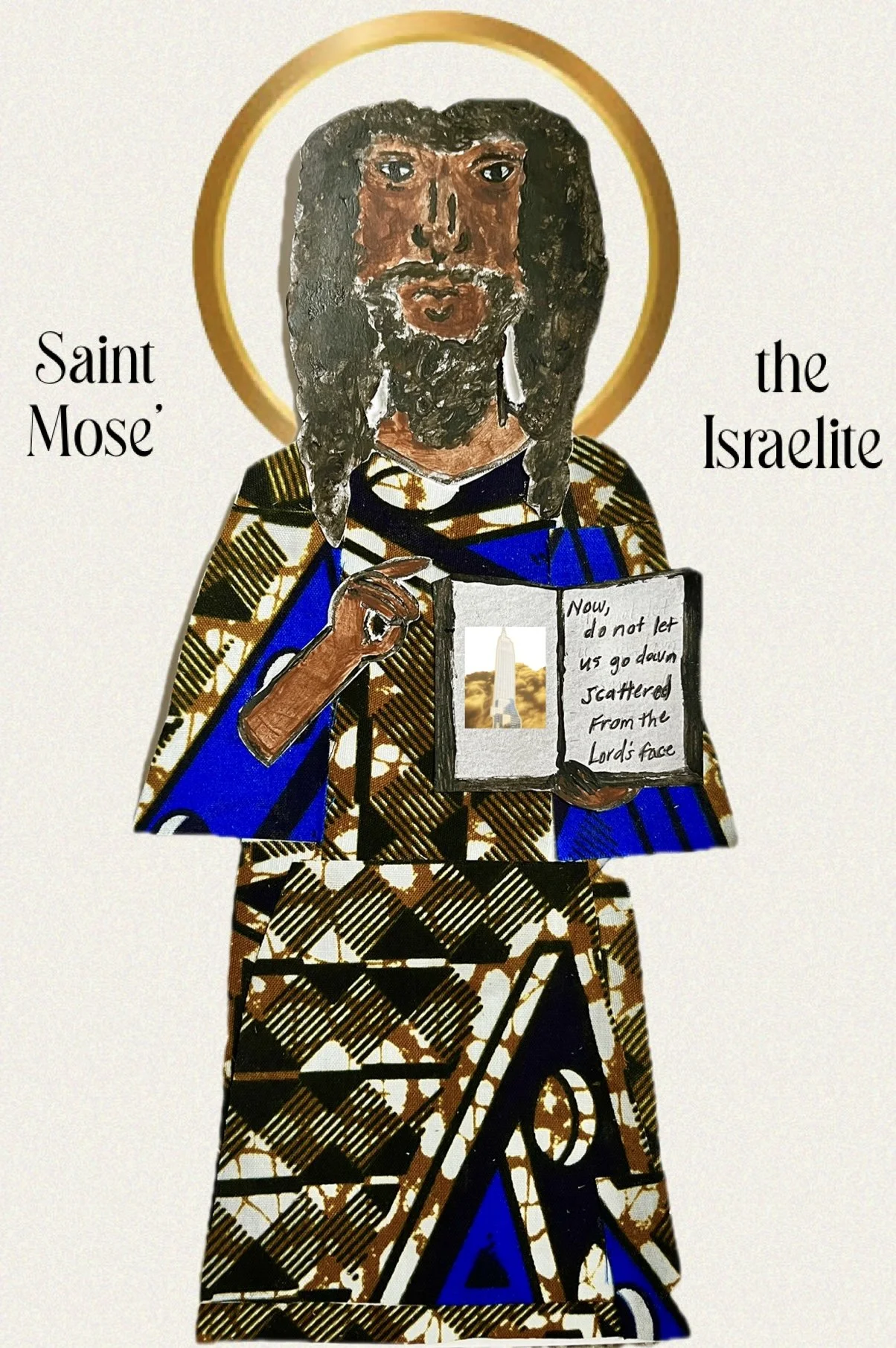



St Mose’, the Israelite
There is a common theme throughout the human story where mothers give birth to children in uncertain and even perilous times for some. They then, along with other caregivers and loved ones, release the child/children to the world with daring hope if not full trust–that the child/children will be met on the other side with every principle and conviction toward goodness being drawn out and re-membered to ground them and those around, to propel them all forward towards a long-awaited future; a future where folks can live in abundance and reciprocity undergirded by love.
Mose’ is one example of this story from the Ancient Near East, who found himself having to sift through the noise and offer correction and care to wounded doubters–a position that he, too, wrestled with. The Hebrew text tells us that the people, as a collective, were not ready for all that God had promised. And upon the first few reads, how could they be? A land flowing with milk and honey, spread among every speckle of dust throughout the entire world, even more so beyond what one could ever dream or imagine–this was something huge for anyone to take on, no matter who they were. God gave Mose’ glimpses of this, however, in the midst of battles against overzealous pride, domineering egos, presumptuous leadership, and greed driven by anger and fear.
A Byzantine Hoodoo reflection on the story given to and including Mose,’ asks readers, hearers, and viewers to re-member the principles of goodness that ground and shape our being toward liberty and justice for all. It sees the promise of this text extending beyond the confines of this text, and moving with an audacious hope to see that our present generation be released from the captivity that keeps our hearts, minds, bodies, spirits, and souls from living more and more into the glimpses that the early Hebrew Israelites witnessed–glimpses that from the lens of Byzantine Hoodoo, includes liberty and justice for all.
It acknowledges the dreams, intuitions, service, work, and fight of our more recent foreparents, whose ancestral lineage we may call by contemporary name, as important to the Way forward as well.
And so shall it be.